
.svg)
.svg)
.svg)
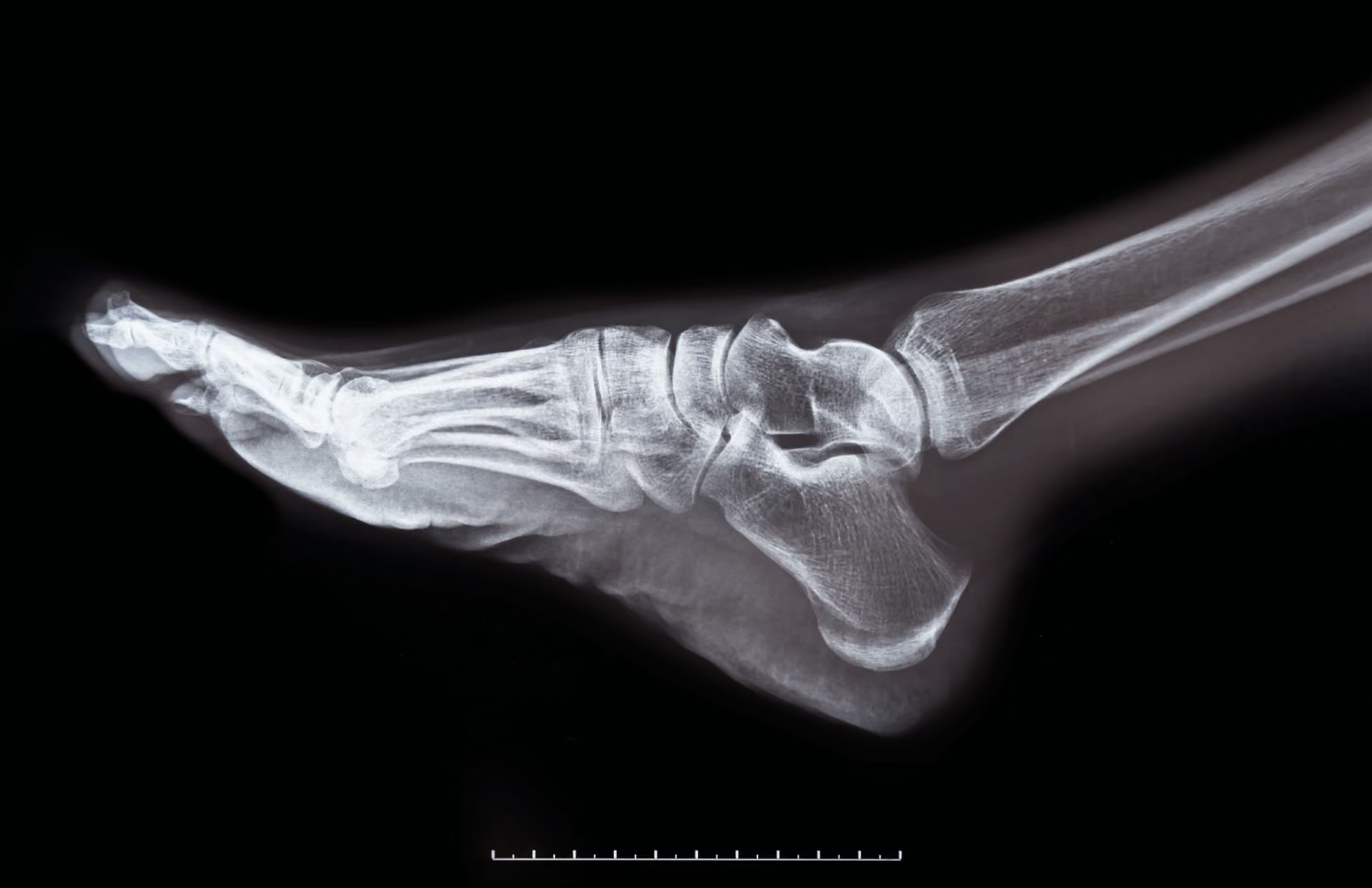
That nagging ache on the top of your foot can feel like a strained muscle or a shoe that’s rubbing in the wrong spot, but for many people, it’s a stress fracture. This tiny crack in a bone is common in active people. In fact, they account for up to 20% of injuries seen in sports medicine clinics. Catching a stress fracture early is important because pushing through the pain can turn that small crack into a more serious break that hurts more and takes longer to heal. The tricky part is that the first signs can feel like normal soreness or a mild injury.
Read on to dive deeper into the warning signs of a foot stress fracture, whether or not you’re at risk for one, and where to find the best foot surgeon in Los Angeles for accurate diagnosis and effective treatment.
Early Signs of a Stress Fracture in the Foot
Symptoms of a stress fracture in the foot are often mild and easy to brush off. You might feel a dull ache or tightness in one small area of your foot, like a sore spot that worsens when you walk fast, climb stairs, or jog, then settles down when you sit and rest. Over time, that pain may begin earlier during activity and linger longer afterward. The most telling signs are:
- Pinpoint tenderness in one exact spot
- Swelling that can be mild and localized to a small area on the top of the foot or around one side
- A faint patch of redness or a little bruising near the sore point
Stress fracture pain typically worsens with weight-bearing activity and improves with rest, and tenderness and swelling are often localized rather than spreading across the whole foot.
Where Do Stress Fractures Happen Most?
Foot stress fractures commonly happen in certain areas of the foot. Usually, in the metatarsals, especially the 2nd and 3rd metatarsal bones. People often describe stress fractures as a sore, bruised ache across the middle or top of the foot that flares when they push off to walk or run, then decreases with rest.
Stress fractures can also occur in the heel bone, known as calcaneus stress fractures. This typically causes heel pain during exercise and can feel very much like plantar fasciitis, which is one reason it is often overlooked at first.
Another area prone to stress fractures is the navicular, a small bone in the middle of the foot. A stress fracture here can cause pain that is harder to pinpoint because it causes a deep ache in the middle of the foot that gets worse with activities like sprinting or jumping.
What Causes Foot Stress Fractures in the Feet?
Stress fractures typically occur with repetitive impact loading, such as running, jogging, or jumping, or with a sharp increase in daily steps. Walking or running on hard surfaces like concrete can make each step feel painful. Wearing worn-out shoes can also reduce impact absorption, so the force continues to travel into your foot's bones.
Your body mechanics matter, too. Having flat feet, very high arches, or gait issues can all increase your risk of developing a stress fracture. Osteoporosis and other medical conditions can cause a low bone density and make stress fractures happen even with normal activity.
Stress Fracture vs. Foot Sprain: How to Tell The Difference
A sprain and a stress fracture can both make taking a step painful, but there are some subtle hints that can help you tell the difference:
- Pain from a stress fracture usually creeps in over days or weeks, and it happens in a precise sore spot on the bone that you can point to with one finger. The pain also tends to get worse over time. Additionally, rest usually helps the pain subside temporarily.
- An ankle sprain is more likely to occur after a twist, misstep, or awkward landing. The pain typically occurs around the ankle and is accompanied by swelling and stiffness. The pain of a foot sprain is not always textbook, but it typically persists for several days to weeks before healing.
How Long Does a Foot Stress Fracture Take to Heal?
The best treatment for a foot stress fracture is giving the bone a break from impact so it can heal. That usually means stopping running and jumping, cutting back on long walks, and shifting to lower-impact activities while the sore spot heals. The best podiatrist in Los Angeles may also recommend a walking boot or foot brace to reduce load, and some people need crutches for a while.
Healing time depends on where the stress fracture is located and how quickly you get treatment. Most stress fractures heal in about six to eight weeks, although some can take longer.
Finding the Best Foot Surgeon in Los Angeles for Effective Stress Fracture Repair and a Fast Recovery
If foot pain is interfering with how you want to live your life, you may be dealing with a stress fracture or any of the many other foot or ankle conditions. At Foot & Ankle Specialty Group, Dr. Soomekh and his team combine his board-certified expertise with a patient-first approach to deliver the most accurate diagnosis and a personalized treatment plan.
At our state-of-the-art Beverly Hills clinic, we offer in-house diagnostics with low-radiation digital X-rays and 3D CT scans, so you can get a clearer picture of the problem without being sent all over town. We also offer a full range of treatment options, from custom orthotics and regenerative orthobiologic medicine to minimally invasive surgery.
Ready to rely on steady hands, direct communication, and personalized treatment plans from the best foot surgeon in Los Angeles?



.svg)




.svg)

.svg)