
.svg)
.svg)
.svg)
Maybe the discomfort in your Achilles tendon has been building for weeks, or maybe you felt a sudden pop that stopped you in your tracks. Either way, one of the first questions many people ask is whether they're dealing with Achilles tendinitis or a torn Achilles tendon.
The Achilles tendon is the largest and strongest tendon in the body, yet it is also one of the most commonly injured. In fact, Achilles tendinopathy affects up to 24% of athletes during their lifetime, although it can also develop in people who are simply more active than usual or who have recently increased their activity level. Knowing the difference between inflammation, degeneration, and a tendon tear can help you get the right treatment as soon as possible.
Read on to learn about the symptoms that help distinguish Achilles tendinitis from an Achilles tear, and when it's time to seek expert medical care from the best podiatrist in Los Angeles.
Achilles Tendinitis vs. Achilles Tear
The biggest difference between these two common tendon disorders is how the injury develops. Achilles tendinitis usually builds over time from repeated stress on the tendon, whereas an Achilles tear happens when some or all of the tendon fibers suddenly break. While both conditions can cause pain in the back of the ankle, the pattern of symptoms often tells an experienced specialist which injury is more likely.
With Achilles tendinitis, patients often describe stiffness when they first get out of bed or soreness that improves as they warm up before returning later in the day. The tendon may feel thickened or tender several inches above the heel. An Achilles tear is more likely to cause a sudden, sharp pain that many people describe as feeling like someone kicked them in the back of the leg. Some hear or feel a pop. Walking may still be possible, especially with a partial tear, but pushing off the foot, climbing stairs, or standing on tiptoe often becomes difficult because the tendon can no longer transfer force from the calf muscles.
How to Tell if Your Achilles Is Torn or Just Inflamed
Many patients assume a torn Achilles must cause unbearable pain or make walking impossible. In reality, partial tears can allow someone to walk, which is one reason they are sometimes mistaken for an ankle strain or tendinitis.
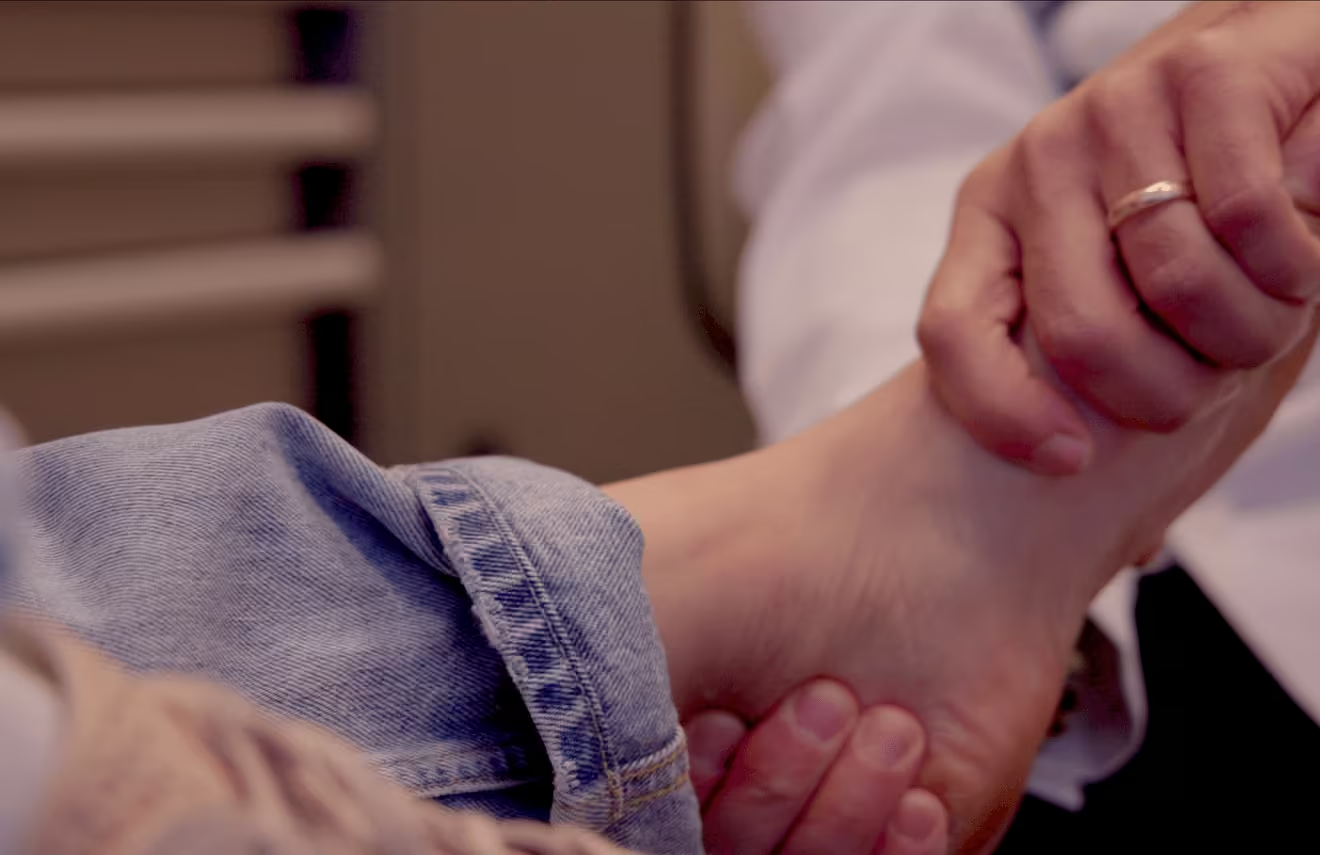
During an examination, the best podiatrist in Los Angeles can assess calf strength, compare both ankles, and evaluate whether you can perform a single-leg heel raise. Someone with tendinitis may find this movement painful, but they can usually complete it. A complete rupture often makes it impossible because the calf muscles cannot effectively pull on the heel. Physicians also perform the Thompson test, which involves gently squeezing the calf while the patient lies face down. If the foot does not naturally point downward, a complete rupture becomes much more likely. Although videos online often demonstrate this test, it can produce misleading results in partial tears or when performed incorrectly. That is why it should never replace a professional evaluation from a foot and ankle specialist.
Does an Achilles Tendon Injury Always Need Surgery?
Many cases of Achilles tendinitis and even some Achilles tears can heal successfully without surgery when treated appropriately. The right treatment depends on the extent of tendon damage, your activity level, and your personal goals.
- Achilles tendinitis usually responds to activity modification, physical therapy, gradual strengthening exercises, supportive footwear, and temporary heel lifts when appropriate.
- Complete Achilles ruptures may be treated surgically or nonsurgically. Surgery is often recommended for younger or highly active individuals because it may lower the risk of another rupture and can help restore strength for demanding activities. Nonsurgical treatment includes regenerative therapies and functional rehabilitation programs.
When Should You See a Foot and Ankle Specialist for Achilles Tendon Pain?
You should see a specialist right away if you feel a pop, suddenly lose strength, cannot push off your foot, or develop significant swelling and bruising after an injury. These symptoms can indicate a tendon tear that benefits from early evaluation.
You should also schedule an evaluation if Achilles pain lasts more than a few weeks despite rest, returns every time you become active, or keeps you from exercising, working, or enjoying daily activities. Persistent pain often signals that the tendon is no longer responding to simple home care.
Finding the Best Podiatrist in Los Angeles for Achilles Tendon Treatment
Tendon injuries can worsen over time when left untreated. Getting the diagnosis right early can help you avoid unnecessary setbacks and choose the treatment that gives you the best chance for a full recovery.
This is why the team at Foot & Ankle Specialty Group is committed to evaluating each Achilles injury to determine exactly what is causing your symptoms before recommending treatment. As a board-certified foot and ankle specialist and surgeon, Dr. David Soomekh specializes in both nonsurgical care and complex foot and ankle reconstruction, giving him the expertise to treat everything from overuse tendon injuries to complete Achilles ruptures.
Ready to get the best Achilles tendonitis treatment in Los Angeles and return to the activities you enjoy?



.svg)




.svg)

.svg)