
.svg)
.svg)
.svg)
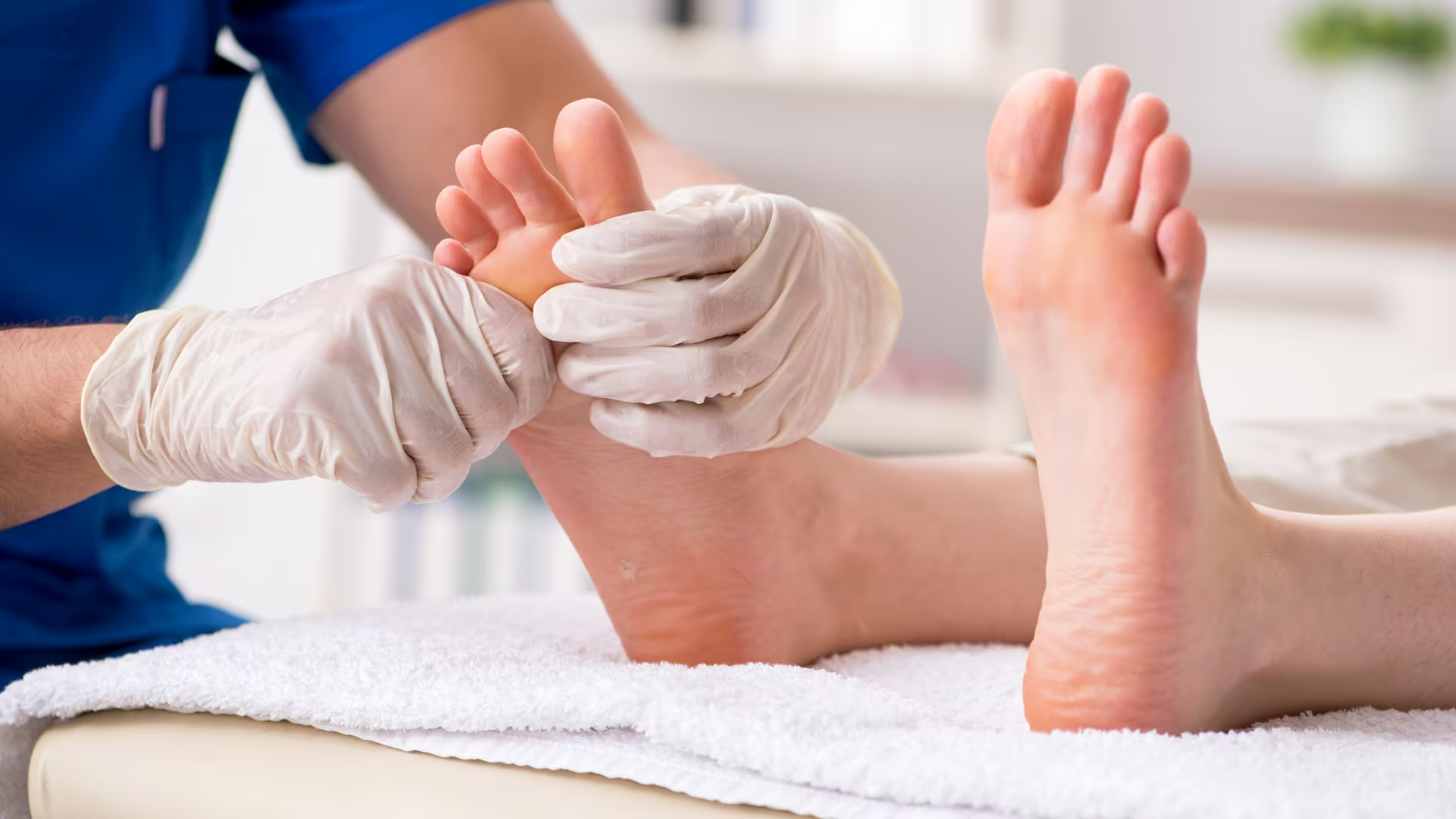
A bunion can turn everyday activities into a challenge. Walking through the neighborhood, standing at work, or finding shoes that fit comfortably may become harder as the bump at the base of your big toe grows more painful. Even a mild bunion can make certain shoes uncomfortable, while a more advanced deformity may affect how you walk.
Getting the right treatment depends on several factors, including the severity of the condition, the health of your toe joint, and your desired activity level. While nonsurgical care can ease discomfort, surgery is often needed for long-lasting relief. Read on to learn more about the different treatment options available today and where to find the best bunion treatment in Los Angeles.
How Can I Tell Which Bunion Treatment is Right for Me?
A bunion, also called hallux valgus, forms when the first metatarsal bone shifts toward the inside of the foot and the big toe angles toward the smaller toes. This creates the visible bump at the base of the big toe.
Bunions can vary in both severity and structure, with some causing very little discomfort, and others leading to persistent pain, stiffness, inflammation, or pressure on nearby toes. There are several factors to consider when looking for the right bunion treatment:
- The degree of bone misalignment: A mild bunion may respond well to measures that reduce pressure. A larger deformity may require surgical realignment.
- Your pain and mobility: Occasional irritation from certain shoes calls for a different approach than pain that limits walking or daily activities.
- The condition of the toe joint: Arthritis or significant joint damage can affect which surgical procedure is appropriate.
- Your foot mechanics: The way your foot bears weight and moves while walking can influence treatment planning.
- Your lifestyle and goals: Your work, exercise routine, footwear needs, and recovery considerations all play a role.
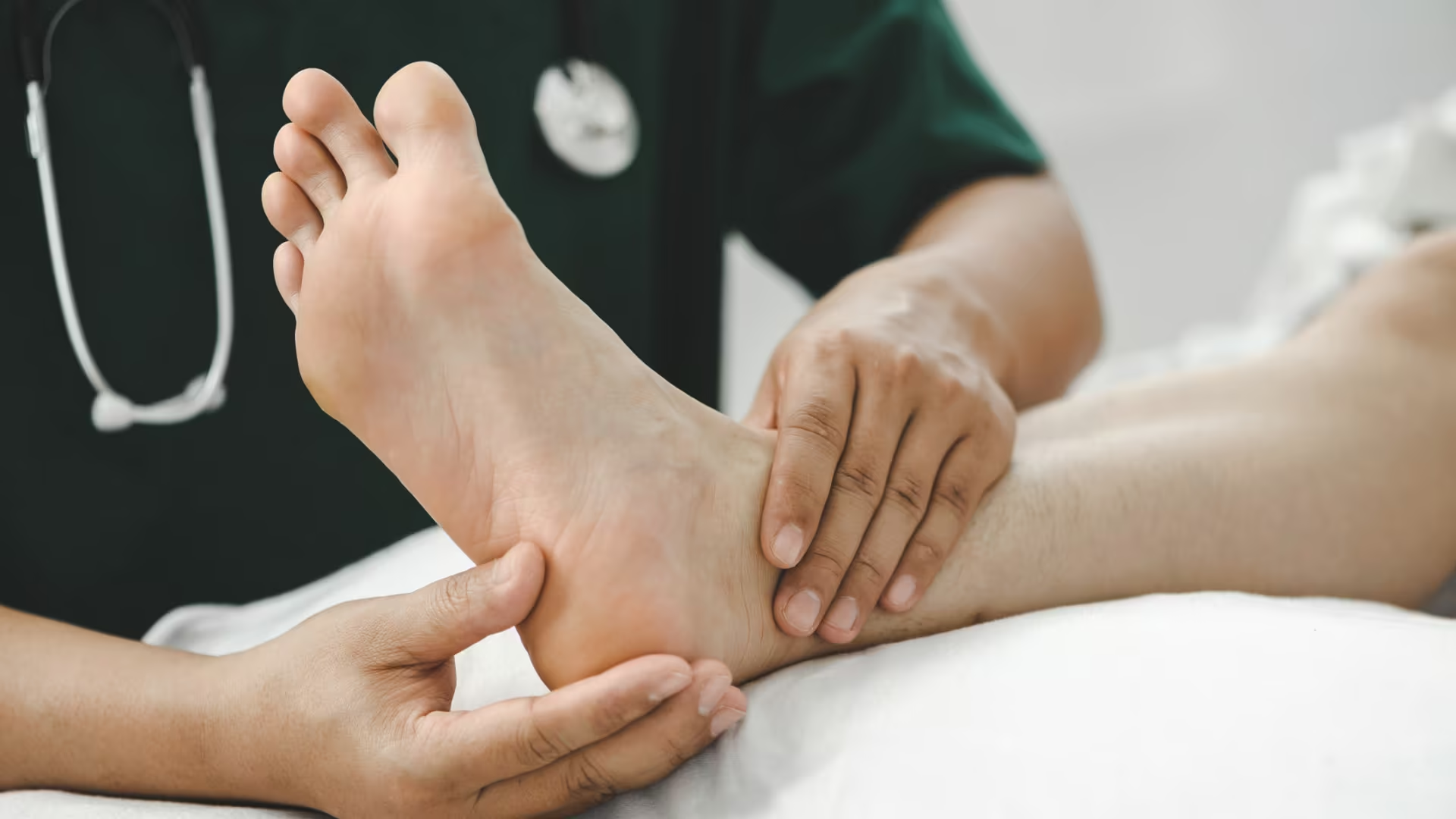
A physical examination and weight-bearing X-rays are two ways a specialist can assess the deformity and help you find the right treatment. More detailed imaging, including a 3D CT scan, may also be useful when dealing with large or painful bunions.
Can Wider Shoes and Padding Relieve a Bunion?
For a mild bunion or one that causes discomfort only in certain shoes, footwear changes are a sensible place to start. The goal with choosing a shoe with a wider foot box is to reduce pressure on the prominent joint and give the toes room to sit naturally. You should look for shoes with:
- A wide, deep toe box that does not squeeze the big toe
- A comfortable fit around the widest part of the forefoot
- A stable sole and adequate support
- A low heel that limits excess pressure on the front of the foot
Additionally, bunion pads or moleskin can cushion the area and reduce rubbing against the shoe. Ice can also help calm soreness after a long day on your feet, and an appropriate anti-inflammatory medication may help manage pain when your medical history allows it.
While these at-home bunion treatments can make walking and wearing shoes more comfortable, they do not move the bones back into their original position, and they cannot correct the underlying deformity.
Can Orthotics Help Correct a Bunion?
Orthotics can help manage bunion symptoms by changing how pressure impacts the foot. Depending on your foot structure, the best podiatrist in Los Angeles may recommend over-the-counter inserts or custom-molded orthotics.
Custom orthotics are designed around your individual foot shape and support needs. They help address abnormal foot mechanics, improve comfort, and reduce stress around the big toe joint far better than one-size-fits-all shoe inserts that you buy over-the-counter. Toe spacers are another type of orthotic that can provide additional relief by creating room between the big toe and second toe. However, they cannot permanently straighten a bunion caused by changes in bone alignment.
Typically, orthotics are only helpful when:
- Your bunion causes discomfort during walking or exercise
- Your foot mechanics contribute to pressure around the joint
- You need added support while wearing everyday shoes
- You want to manage symptoms before considering surgery
Can Regenerative Therapy or Orthobiologic Injections Help Relieve Bunion Pain?
Regenerative therapy can help when inflammation around the big toe joint contributes to pain. Corticosteroid injections can reduce inflammation in certain cases, including pain associated with bursitis or arthritis. Sometimes platelet-rich plasma (PRP) can also help with inflammation. However, injections only temporarily relieve inflammation; they don’t correct the bones that create the bunion.
When Should I Consider Bunion Surgery?
Bunion surgery is usually recommended when pain continues despite footwear changes, orthotics, and other conservative treatments. It is also considered when the deformity makes walking difficult, limits your footwear choices, or causes the big toe to crowd the neighboring toes.
Surgery is intended to correct the underlying alignment, relieve pain, and improve foot function. The type of bunion procedure you need will depend on the bunion’s location and severity, as well as the condition of the big toe joint. For the surgical treatment for mild to moderate bunions:
- Head osteotomy, also called a Chevron or Austin procedure, shifts the bone into better alignment and secures it with small screws while it heals.
- Soft tissue adjustment releases and tightens surrounding ligaments to help realign the big toe.
For moderate to severe bunions:
- An opening base wedge osteotomy corrects the bone’s position and secures it with a plate and screws. This procedure may also require a bone graft.
- Lapidus procedure addresses alignment and stability at the base of the first metatarsal.
- Lapiplasty 3D customized bunionectomy corrects the position and rotation of the first metatarsal in three dimensions, addressing the deformity at its source.
For bunions with significant arthritis, a big toe joint fusion is often the treatment of choice. When severe arthritis contributes to pain, the surgeon fuses the big toe joint bones to stabilize the area and address both the deformity and arthritis. This procedure changes joint movement, so the benefits, limitations, and recovery should be discussed beforehand.
How to Care For Your Feet After Bunion Surgery
Every bunion surgery has a recovery time, but how that recovery looks depends on which type of bunion surgery you had and your overall health. Some patients can put weight on the foot relatively soon while wearing a protective surgical shoe or walking boot. Other procedures require a longer period of restricted weight-bearing. Typical recommendations after bunion surgery can include:
- Wearing a surgical shoe or walking boot
- Keeping the foot elevated to help manage swelling
- Following guidance on when to bear weight
- Attending follow-up visits to monitor healing
- Gradually returning to normal shoes and activities
Keep in mind that a full recovery can take several months, and some swelling may persist even after you return to regular footwear. Your long-term results depend on following your recovery plan and choosing shoes that accommodate your foot.
Finding the Best Bunion Treatment Los Angeles
Choosing a bunion treatment requires the guidance of an expert podiatrist with an extensive amount of experience with bunions. When pain persists or the bones are significantly misaligned, choosing the right surgeon can mean the difference between continued pain and restored function.
Dr. David J. Soomekh, DPM, is a board-certified foot and ankle surgeon and Diplomate of the American Board of Foot and Ankle Surgery. He leads our team at Foot & Ankle Specialty Group in Beverly Hills, where he evaluates bunions using a detailed clinical examination, gait assessment, digital X-rays, and 3D CT imaging when needed. His surgical experience includes osteotomies, Lapidus procedures, Lapiplasty 3D customized bunionectomy, and other techniques tailored to your needs. He also uses plastic surgery-style closure techniques to help minimize visible scarring.
Ready to schedule a personalized treatment plan with the best bunion treatment in Los Angeles?


.svg)


.svg)

.svg)