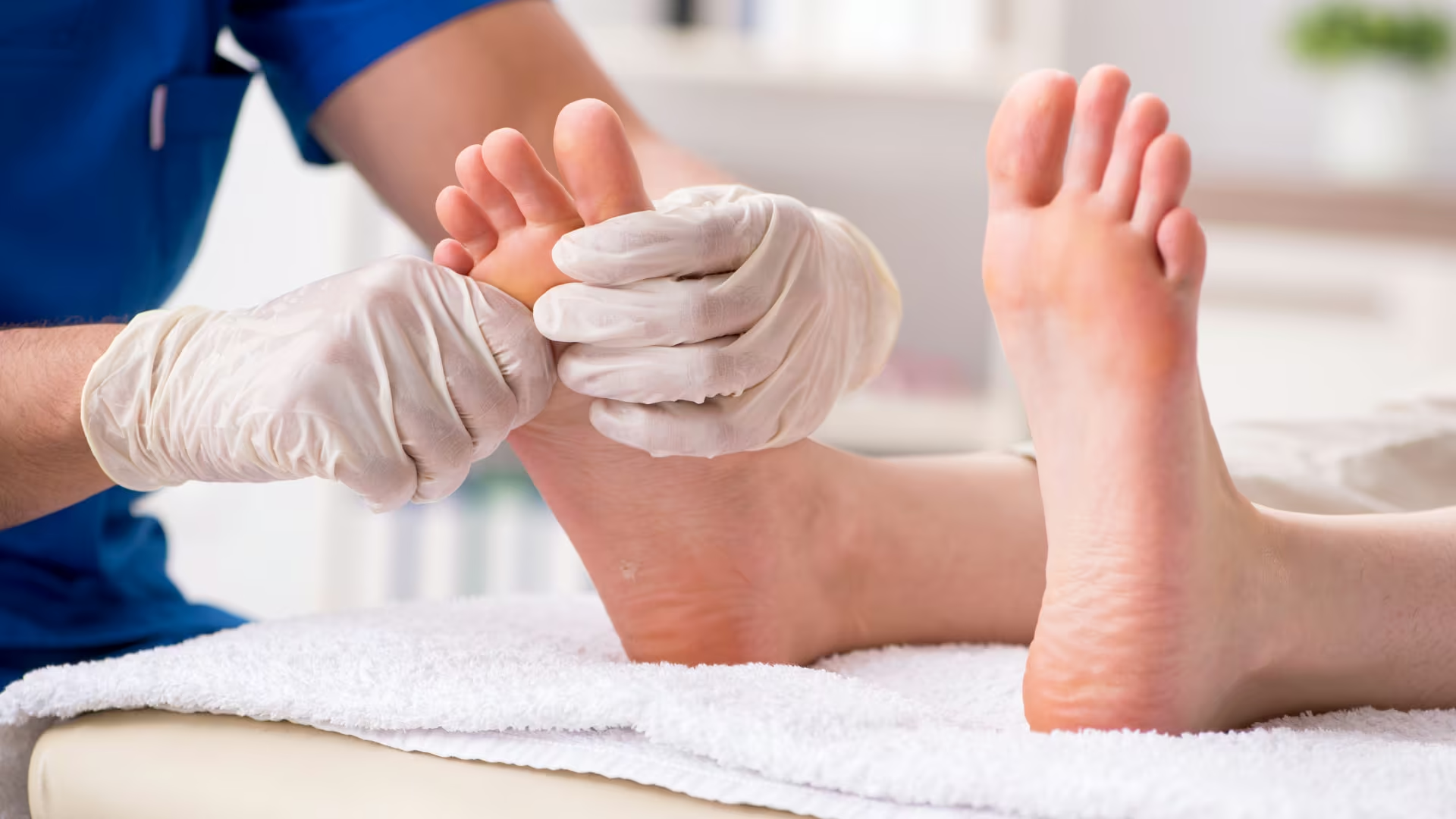
You go to bed feeling fine, then wake up at 2 a.m. with a big toe so hot, swollen, and tender that even the weight of a bedsheet feels unbearable. After a week or two, the pain fades, and life goes back to normal until the next attack.
Gout affects about 9.2 million adults in the United States, according to a national study of U.S. health data. The same research found that only about one in three people with gout used medication to lower their uric acid, which helps explain why flares keep returning. Read on to learn why gout targets the foot and ankle, why attacks come back, how a foot and ankle specialist confirms the diagnosis, and how the right plan protects your joints.
Why Does Gout Always Happen in the Toes?
Gout develops when uric acid builds up in your blood and forms sharp, needle-like crystals inside a joint. Your body makes uric acid when it breaks down purines, natural substances found in your cells and in many foods. When your kidneys cannot clear enough of it, the extra uric acid settles into your joints. The feet are a common target because:
- Cooler temperatures in the toes and feet make it easier for crystals to form
- The big toe joint takes on a lot of pressure with every step
- Mild dehydration and lower body temperature overnight can set off crystals while you sleep
- Joints with existing arthritis or past injuries collect crystals more easily
The big toe joint is the most common spot for a first attack. Gout can also flare in the midfoot, heel, and ankle.
Why Do Gout Attacks Keep Coming Back?
When a flare ends, the pain fades, and the crystals stay behind in the joint. As long as your uric acid stays high, new crystals keep forming. Common triggers include:
- Alcohol, especially beer and liquor
- Red meat, organ meats, and shellfish
- Drinks sweetened with high-fructose corn syrup
- Dehydration
- Certain medications, including some water pills
- Illness, injury, or surgery
Repeated flares can lead to chronic gout. Crystals can gather into firm lumps under the skin called tophi, wear down cartilage, and erode the bone around the joint. For a refresher on symptoms and at-home care, our article on understanding gout and finding lasting relief covers the basics.
How Do Doctors Confirm a Gout Diagnosis?
Infection, pseudogout, and stress fractures can all look like gout, so confirming the diagnosis helps you get the right treatment. Our patients commonly ask, “If my blood test showed normal uric acid, can it still be gout?” The answer is yes. Uric acid levels can dip during a flare, so one normal blood test does not rule it out.
A foot and ankle specialist may use:
- A physical exam and a review of your history and triggers
- Joint fluid analysis, which checks a small fluid sample for crystals under a microscope
- Blood tests to measure uric acid and kidney function
- Digital X-rays to look for bone damage from long-standing gout
- Diagnostic ultrasound, which can show crystal deposits on the joint surface
- 3D CT imaging to map joint damage in detail
Joint fluid analysis remains the most reliable way to confirm gout.
How Can You Treat a Gout Attack Quickly?
During a flare, the goal is to ease pain and swelling fast. Treatment works best when it starts within the first day of symptoms. Options include:
- Anti-inflammatory medications, including indomethacin, ibuprofen, or naproxen
- Colchicine, which works best when you take it early in the flare
- A corticosteroid injection directly into the joint
- Rest, ice, and elevation
- A walking boot to take pressure off the joint while it settles
Your doctor will match the medication to your kidney function and overall health.
Long-Term Gout Management
Once a flare settles, the next step is lowering your uric acid so new crystals stop forming, and old ones slowly dissolve. People with frequent flares, tophi, or joint damage usually benefit from urate-lowering medication, including allopurinol, febuxostat, or probenecid. Doctors generally aim to keep uric acid at 6 mg/dL or lower and check it with regular blood tests.
Starting these medications can briefly trigger flares as crystals break apart, so your doctor may prescribe low-dose colchicine for the first few months. Daily habits help too:
- Drink plenty of water throughout the day
- Limit alcohol, sugary drinks, and high-purine foods
- Work toward a healthy weight at a steady pace
- Review your current medications with your doctors
- Wear supportive shoes or custom orthotics to ease stress on damaged joints
When Does Gout Require Surgery?
Most people never need surgery for gout. When years of flares have damaged a joint, surgery can relieve pain and restore function. A foot and ankle surgeon may recommend:
- Removing large tophi that cause pain, skin wounds, or trouble wearing shoes
- Cleaning out the joint to remove crystal deposits and damaged tissue
- Fusing the big toe joint or ankle when arthritis has worn away the cartilage
Early, steady treatment helps you avoid this stage.
Where to Find the Best Gout Treatment in Los Angeles
Gout responds well when you have a clear plan and a doctor who follows your progress. Our team takes the time to explain what is causing your flares, why we recommend each step, and how to protect your joints between visits. For those searching for the best podiatrist in Los Angeles, Dr. David J. Soomekh is a board-certified foot and ankle surgeon, a Diplomate of the American Board of Foot and Ankle Surgery, and a Fellow of the American College of Foot and Ankle Surgeons. Dr. Soomekh offers digital X-rays, diagnostic ultrasound, ultrasound-guided injections, and the PedCAT 3D weight-bearing CT scanner, which only 26 practices in the country offer in-office.
Our office sits on North Roxbury Drive between Wilshire Boulevard and Santa Monica Boulevard, about a mile from Century City and a short drive from Cedars-Sinai Medical Center.
Those searching for the best gout treatment Los Angeles has available can call our Beverly Hills office or book online to start a plan that keeps flares from coming back.